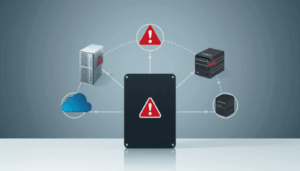
Every Device Will Fail
Many businesses invest heavily in servers, NAS systems, CCTV recorders, cloud platforms, enterprise storage, and the latest IT infrastructure. Unfortunately, some decision-makers assume that because a device is expensive, branded, or built on new technology, it will never fail—or at least not anytime soon.
This belief is one of the most dangerous assumptions in data protection.
The reality is simple:
Every storage device will fail.
The question is not if it will fail, but when.
The Myth of “Premium Means Permanent”
A common mistake among business owners and even some IT purchasers is believing that higher cost automatically means immunity from failure.
An enterprise-grade server can fail.
A high-end NAS can fail.
A RAID system can fail.
A cloud service can experience outages.
Even the latest SSD technology can become inaccessible without warning.
Premium equipment may reduce risk and improve reliability, but it does not eliminate the possibility of failure.
Technology manufacturers themselves understand this reality. This is why warranties exist. A warranty is an acknowledgment that failures are expected during the product’s lifetime.
New Technology Does Not Mean Zero Risk
Many organizations adopt new technologies believing they are inherently safer than older systems.
For example:
- SSDs replaced traditional hard drives for speed and durability.
- RAID systems were introduced for redundancy.
- Cloud platforms promised high availability.
- Virtualization improved flexibility and resource utilization.
While these technologies provide significant advantages, none of them remove the risk of data loss.
In some cases, newer technologies create new recovery challenges.
When a traditional hard drive fails, recovery specialists may have options to retrieve data from damaged components.
When an SSD fails, the data may become inaccessible instantly due to controller failure, firmware corruption, encryption, or electronic damage.
Modern systems are often more complex, making failures less frequent but potentially more difficult to recover from.
Real-World Causes of Device Failure
Devices fail for many reasons, including:
Hardware Failure
Components wear out over time.
Hard drives contain mechanical parts that eventually fail. SSDs have memory cells with finite write lifespans. Power supplies, controllers, cooling systems, and motherboards can all malfunction.
Human Error
Accidental deletion remains one of the leading causes of data loss.
Files are overwritten, systems are misconfigured, storage is reformatted, and backups are mistakenly deleted.
Software Problems
Operating system corruption, failed updates, application bugs, and database errors can make critical information inaccessible.
Cybersecurity Incidents
Ransomware attacks can encrypt data regardless of how expensive the storage device is.
Attackers target organizations of every size, from multinational corporations to small businesses.
Environmental Events
Fire, flood, power surges, lightning strikes, and natural disasters can destroy equipment instantly.
The most advanced storage device in the world offers little protection against physical destruction.
Why Business Continuity Plans Must Assume Failure
Effective business continuity planning starts with a realistic assumption:
Every component in the environment can fail.
This mindset changes how organizations approach risk.
Instead of asking:
“How reliable is this device?”
Ask:
“What happens when this device fails?”
The goal is not to prevent all failures. That is impossible.
The goal is to ensure the business can continue operating despite failures.
Build Around Redundancy, Not Trust
A resilient infrastructure does not depend on a single device.
It depends on layers of protection:
- Multiple copies of critical data
- Automated backups
- Offsite storage
- Cloud replication
- Disaster recovery procedures
- Security controls
- Regular backup testing
No single technology should be trusted as the only line of defense.
If the failure of one device can stop operations or cause permanent data loss, the organization remains vulnerable.
The Most Dangerous Statement in IT
Data recovery professionals hear this phrase repeatedly:
“We thought it wouldn’t happen to us.”
Unfortunately, many organizations begin planning only after a failure occurs.
By then, options may be limited, recovery costs may be significant, and some data may already be lost forever.
Preparation is always less expensive than recovery.
Be Aware, Be Prepare
Technology has become faster, smarter, and more reliable than ever before.
But one fundamental truth has never changed:
Every device will eventually fail.
Whether it is a hard drive, SSD, server, NAS, RAID array, cloud platform, or CCTV recorder, failure is a certainty that must be planned for.
Organizations that acknowledge this reality build backup systems, disaster recovery plans, and business continuity strategies before disaster strikes.
Those who ignore it often learn the lesson the hard way.
Be aware that failure is inevitable.
Be prepared so failure does not become a catastrophe.